Fridays Freebies #3
Hello music lovers,
This week we have four freebies: 1) Guitar chords Level 2: The Key of G, 2) The swing classic, After You’ve Gone, 3) Silent Night on the Puerto Rican cuatro, and 4) Ask Asher, live stream #2. The lessons contain videos, tab, and/or chord diagrams. Comments and questions are always welcomed and strongly encouraged!
Chords Level 2: The Key of G
In our previous lesson I discussed chords: level 1. We simply learned the 3 most common chords in each of the 7 guitar friendly keys. In level 2 we will learn to enrich the same chords using notes from the major scale (diatonic notes) that are not in the basic chords. By adding these notes we will construct the add9, sus4, 6, Maj 7, and the dominant 9 chords.
Here it is:
Chords Level 2: The Key of G
After You’ve Gone
After You’ve Gone may be as old as jazz itself. It was written by composer, Turner Layton, in the 1918. Every jazz legend has performed or recorded this song from the Great American Song Book. Django Reinhardt, Al Jolson, Gene Krupa, Bessie Smith, Louis Armstrong, and many more have made this song part of their repertoire. Originally it was a slower song but it can be played at any tempo. Compare the Fiona Apple with John Pizzarelli’s version in the videos below and you’ll see what I mean. Joscho Stephan is a gypsy jazz guitarist from the school of Django. If you are not familiar with gypsy jazz, watching Joscho is a great place to start. The chords are provided below the videos.
Here it is:
After You’ve Gone
Silent Night on the Puerto Rican Cuatro
here it is!
Ask Asher
Asher Rives is my twelve year old student and co-host of our live streams. In our second stream we discuss guitars and compare contemporary music to music from the golden age of radio. Is music from my generation better than contemporary music? See what Asher has to say.
If you have any questions, comments, or suggestions for future streams feel free to email me.
here it is:
Ask Asher: Live Stream #2
Connect with Brian
guitar lessons by brian.com
You Tube channel
In case you missed last weeks!
Ask Asher (live stream #2)
Asher Rives is my twelve year old student and co-host of our live streams. In our second stream we discuss guitars and compare contemporary music to music from the golden age of radio. Is music from my generation better than contemporary music? See what Asher has to say.
If you have any questions, comments, or suggestions for future streams feel free to email me.
CC
Essential swing for guitarists #3: After You’ve Gone
After You’ve Gone may be as old as jazz itself. It was written by composer, Turner Layton, in the 1918. Every jazz legend has performed or recorded this song from the Great American Song Book. Django Reinhardt, Al Jolson, Gene Krupa, Bessie Smith, Louis Armstrong, and many more have made this song part of their repertoire. Originally it was a slower song but it can be played at any tempo. Compare the Fiona Apple with John Pizzarelli’s version in the videos below and you’ll see what I mean. Joscho Stephan is a gypsy jazz guitarist from the school of Django. If you are not familiar with gypsy jazz watching Joscho is a great place to start. The chords are provided below the videos.
After You’ve Gone Chords
Malaguenia
The notation, chords, and tab:
Malaguenia tab and notation
A computer generated audio of the tab and notation:
Friday’s Freebie’s #2
Hello music lovers,
This week we have four freebies: How to memorize chords level 1 for beginning guitarists, How to play Sweet Georgia Brown and an analysis of Honey Suckle Rose for intermediate to advanced guitarists. We also have minor scales for cuatro. All the lessons contain videos, tab, and/or chord diagrams. Comments and questions are always welcome.
Memorizing Chords level 1
Guitar chords level 1 consist of the 7 friendly keys. They are friendly because no barre chords are involved. Memorizing a lot of chords can seem like a daunting task but when you understand the number system the task becomes much easier. The chords in level 1 are what we call the I IV V (Roman numerals) chord progression.
Here it is:
The I, IV, V chord progression.
Sweet Georgia Brown
Sweet Georgia Brown may be the first swing song I learned. My earliest recollection of it is watching the Harlem Globe Trotters on TV when I was a kid. It was their theme song. Anyone raised in the 60s remembers the whistling version of Sweet Georgia Brown. In the following video you will see my ace student, Asher Rives, performing the classic. I also have versions by the legendary Django Reinhardt, Louis Armstrong, and more. The chords, tab, and melody are also provided.
Here it is:
Sweet Georgia Brown
Analysis of Honey Suckle Rose
Last week I showed you Honey Suckle Rose. Let’s discuss why and how the chords work.
Here it is:
Analysis of Honey Suckle Rose
Minor Scales for Cuatro
In these videos we will learn the pure minor scale and the harmonic minor scales in the key of Dm and how to use them over the Andalusian cadence. The chord progression is know as the Andalusian cadence.
Connect with Brian
In case you missed last weeks!
Friday’s Freebies #1
Essential Swing for guitarists #2: Sweet Georgia Brown
Sweet Georgia Brown may be the first swing song I learned. My earliest recollection of it is watching the Harlem Globe Trotters on TV when I was a kid. It was their theme song. Anyone raised in the 60s remembers the whistling version of Sweet Georgia Brown.
Reportedly Ben Bernie came up with the concept for the song’s lyrics – although he is not the accredited lyricist – after meeting Dr. George Thaddeus Brown in New York City: Dr. Brown, a longtime member of the State House of Representatives for Georgia, told Bernie about Dr. Brown’s daughter Georgia Brown and how subsequent to the baby girl’s birth on August 11, 1911 the Georgia General Assembly had issued a declaration that she was to be named Georgia after the state, an anecdote which would be directly referenced by the song’s lyric: “Georgia claimed her – Georgia named her.”
The tune was first recorded on March 19, 1925, by bandleader Ben Bernie, resulting in a five-week number one for Ben Bernie and his Hotel Roosevelt Orchestra.[1]
One of the most popular versions of “Sweet Georgia Brown” was recorded in 1949 by Brother Bones and His Shadows and later adopted as the theme song of the Harlem Globetrotters basketball team in 1952.
First, let’s us check out four versions:
Now let’s learn the song:
First, let’s analize the chords. The A section of Sweet Georgia Brown follows a chord progression that is very common in jazz known as backing cycling or the cycle of 5ths progression. Notice you start on E7 (at 4 o’clock) and then you go counter clockwise until you reach G, then you skip up to B7 and back cycle again. The B section is a I V in the relative minor (Em).

Here it is:
Tab and chords in the key of G
Tab and chords in the key of F
Let me know if you have questions.
Thanks,
Brian
Friday’s Freebies #1
Hello music lovers,
This week we have three freebies: Chords Level 1 and how to use a capo for beginner guitarists, How to play Honey Suckle Rose for intermediate to advanced guitarists, and how to play Seis Mapeye for Puerto Rican cuatro lovers. All the lessons contain videos, tab, and/or chord diagrams. Comments and questions are always welcome.
Enjoy and thanks!
Brian
Chords level 1
and the capo
Guitar chords level 1 consist of the 7 friendly keys. They are friendly because no barre chords are involved. With these chords and a capo you can play in any key. The first video explains how to read the diagrams. The next video explains how to use a capo. You will also find a quiz at the end to see if you are ready to proceed to level 2.
Here it is:
Guitar chords-level-1 and the cap
Honey Suckle Rose
Honey Suckle Rose is a classic song that was composed in 1929, but it never gets old. The music was written by the great Thomas Wright “Fats” Waller (May 21, 1904 – December 15, 1943) and the lyrics by Andy Razaf. It was recorded my countless musicians and it is considered a jazz standard in what has become known as The Great American Song Book. Like most songs by Waller, this song is very upbeat and great for dancing. The lyrics are funny and light hearted. This song seems to always bring a smile to to faces in the audience.
Here it is:
Honey Suckle- Rose
How to Play Seis Mapeye on the Puerto Rican cuatro
Seis Mapeye is a song I was introduced to me by a Puerto Rican friend. In the video you’ll see me playing the melody. The tab and backing track is also provided.
here it is:
Seis Mapeye
More links to Brian
Essential Swing for Guitarists #1: Honey Suckle Rose
Honey Suckle Rose is a classic song that was composed in 1929, but it never gets old. The music was written by the great Thomas Wright “Fats” Waller (May 21, 1904 – December 15, 1943) and the lyrics by Andy Razaf. It was recorded my countless musicians and it is considered a jazz standard in what has become known as The Great American Song Book. Like most songs by Waller, this song is very upbeat and great for dancing. The lyrics are funny and light hearted. This song seems to always bring a smile to to faces in the audience.
Former student Joel White, winner of multiple awards. Guitarist for the 1 o’clock Jazz Lab Band at University of North Texas..
My rendition:
The original:
When creating an arrangement of jazz standards I have a process:
- I learn the chords.
- I learn the melody as written, which is usually the lower octave in the first position.
- I learn the melody an octave higher.
- I put the chords and melody together creating chord melody or a solo guitar arrangement.
- I improvise over the chord changes as illustrated in the video.
I have provided charts below with the chords, notation and tabs for the melody. The chords may look intimidating at first glance, but if you look closely you, will see many of the fingerings of the chords are the same.
Honey Suckle Rose: chords, tab, and notation, (low octave)
Honey Suckle Rose: chords, tab, and notation, (high octave)
I hope you enjoy and as always I encourage comments and questions.
Lyrics:
When they see you out with me
Goodness knows
You’re my honeysuckle rose
When you’re passin’ by flowers droop and sigh
And I know the reason why
Goodness knows
You’re my honeysuckle rose
Don’t buy sugar
You just have to touch my cup
You’re my sugar
It’s sweeter when you stir it up
When I’m taking sips from your tasty lips
Seems the honey fairly drips
Goodness knows
You’re my honeysuckle rose
You’re my honeysuckle rose
Don’t buy sugar
You just have to touch my cup
You’re my sugar
It’s sweeter when you stir it up
When I’m taking sips from your tasty lips
Seems the honey fairly drips
Goodness knows
You’re my honeysuckle rose
Other renditions:
- Fletcher Henderson (1932)
- Fats Waller (1934), (1937) and (1941)
- Mildred Bailey (1935), Mildred Bailey and Her Alley Cats (Parlophone R 2201, England
- Count Basie (1937)
- Coleman Hawkins, with Benny Carter, Django Reinhardt, Stéphane Grappelli and others (1937)
- Earl Hines (1937)
- Louis Armstrong (1938), Satch Plays Fats (1955, Columbia Records)
- Fats Waller, with Louis Armstrong and Jack Teagarden (recorded live October 1938, and released on Striding in Dixieland [Folkways Records FW02816 / FJ S2816] in 1981)
- Benny Goodman – The Famous 1938 Carnegie Hall Jazz Concert (recorded live January 16, 1938, originally released in 1950) Featuring solos by Benny Goodman, Harry James, Lester Young, Buck Clayton, Count Basie, Johnny Hodges and Harry Carney.
- The King Cole Trio, March 14, 1941, April 11, 1946, July 2, 1947
- Lena Horne – In musical film Thousands Cheer (M-G-M, 1943)
- Teddy Wilson (1944)
Guitar Talk and Freebies
Hello music lovers,
It has been a while since my last mail out. I hope you had a wonderful summer. I had a good time visiting Puerto Rico this summer. I have also been upgrading my tools for teaching. I have used them in some youtube videos and web pages I have created recently.
Here are a few examples:
First, I have arranged Away In The Manger in 4 levels from beginner to intermediate for students using tab, notation, and audio files. It is free to everyone. Check it out!
With my arrangements of Away In The Manger I have provided pdf and audio files so anyone should be able to use them. What you hear is computer generated (not me on guitar) at a slow tempo so it will be easier to learn.
Away In The Manger level 1 (pdf)
Away In The Manger level 2 (pdf)
Away In The Manger level 3 (pdf)
Away In The Manger level 4 (pdf)
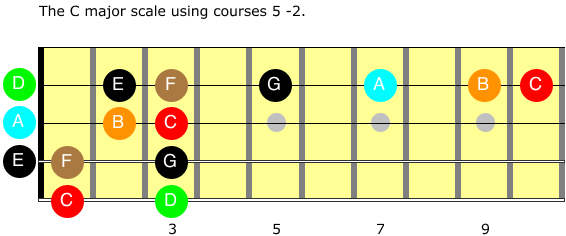
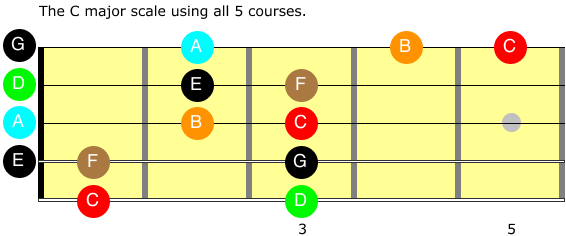
Second, I did a video for you cuatro lovers teaching the C major scale.
Third, I have created a web page for guitarists discussing chord enrichment.
The following is my web page with enriched chords discussed in the video: Guitar Chords level 2
Last, here are the moments of my Puerto Rican vacation with my lovely wife.
A new school year is upon us and I am looking forward to producing more material. If you have a subject you would like to see discussed please drop me a line. I would love to hear from you!
Keep on jamming!
Brian Turner
Puerto Rican Cuatro Lesson: C Major Scale

My wife at Playa Melones, Culebra, PR
5 ways to play the C major scale: