What is Travis Picking?
Travis picking is a fingerpicking technique used in guitar playing, particularly associated with folk, country, and acoustic styles of music. It’s named after Merle Travis, a country guitarist who popularized the technique.
Travis picking involves alternating the thumb between the bass strings (typically the lower three strings) while simultaneously picking the melody and/or harmony notes with the fingers. This technique creates a steady and rhythmic pattern, providing a full and intricate sound even when played on a single acoustic guitar.
The basic Travis picking pattern often involves these steps:
- The thumb plays the bass note of the chord on the downbeat.
- The fingers (usually the index and middle fingers) pick the higher strings to play melody or harmony notes on the upbeats or between the beats.
The thumb and fingers work in coordination, creating a syncopated rhythm that’s a hallmark of Travis picking. This technique is versatile and can be adapted to various chord progressions and melodies, allowing guitarists to create a rich and engaging sound.
Travis picking has been used by many guitarists in different genres to create a distinctive and captivating style. It requires practice and precision to master, as it involves independent movement of the thumb and fingers.
For Sale: 2007 PRS 10 Top Custom 22
SOLD
This is a 2007 Paul Reed Smith 10 Top Custom 22 with tremolo (wammy bar) and a cherry burst finish. The serial number is 7116932 if you care to research the guitar. I am the second owner and I knew the first owner well. It is in very good condition. There has not been any modifications. The only flaws are the few nicks seen in the pictures and the pickups are showing their age (kinda like me). It plays and sounds great!
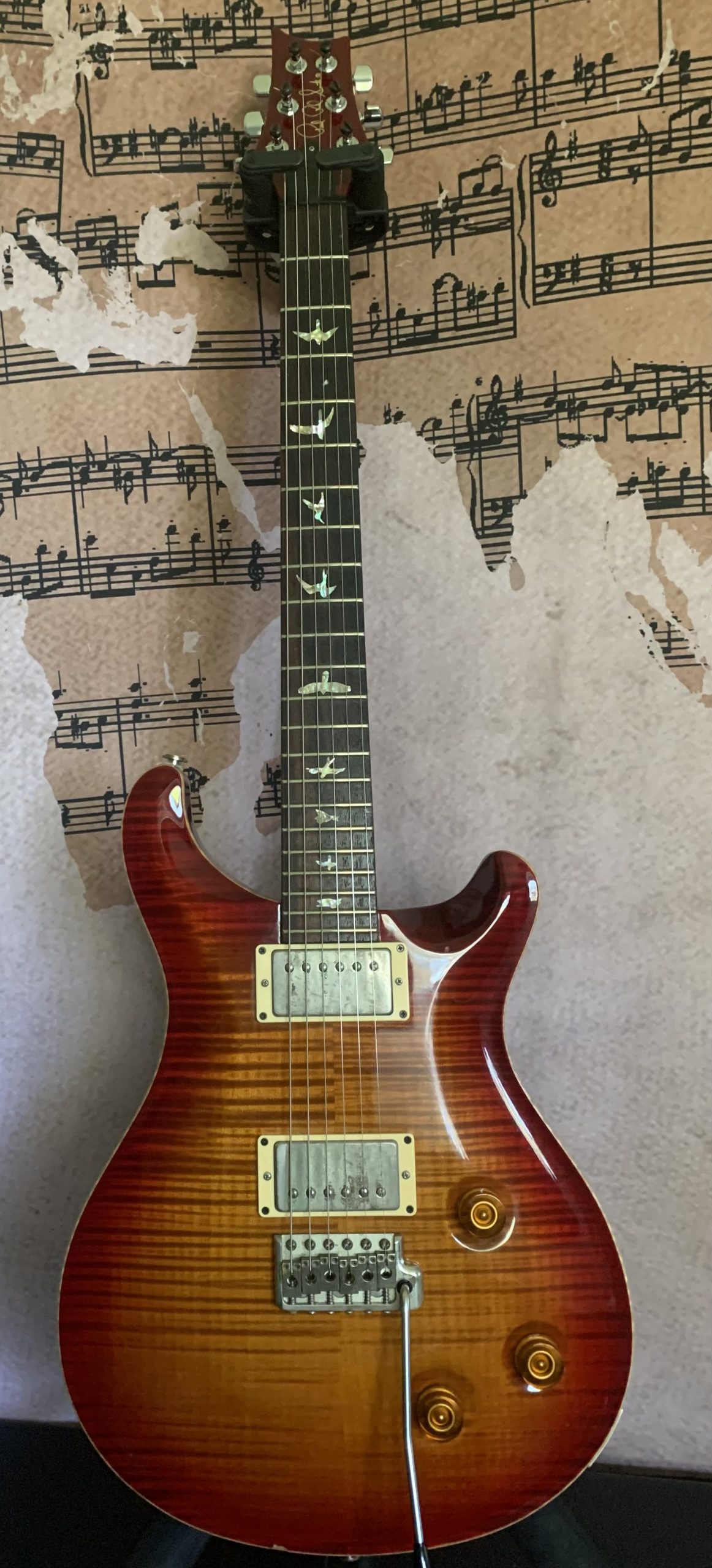
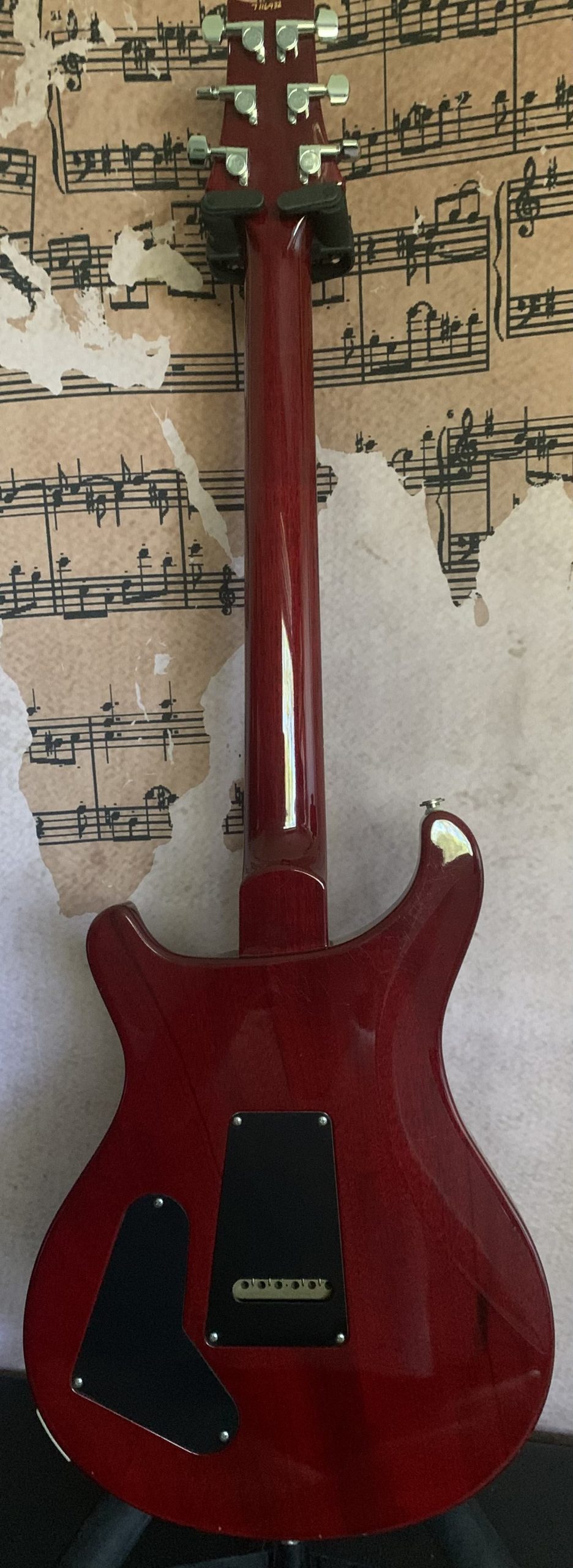
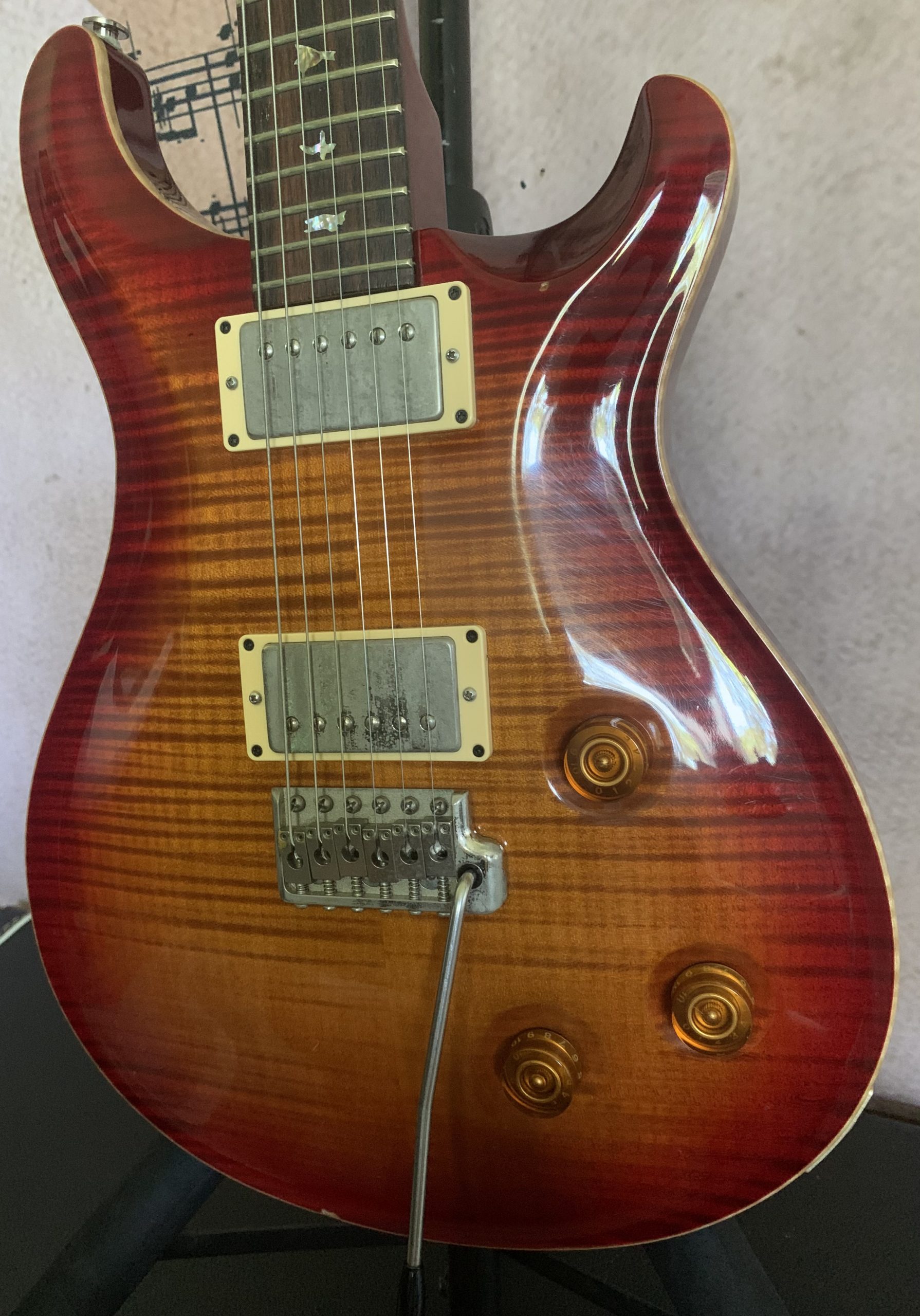
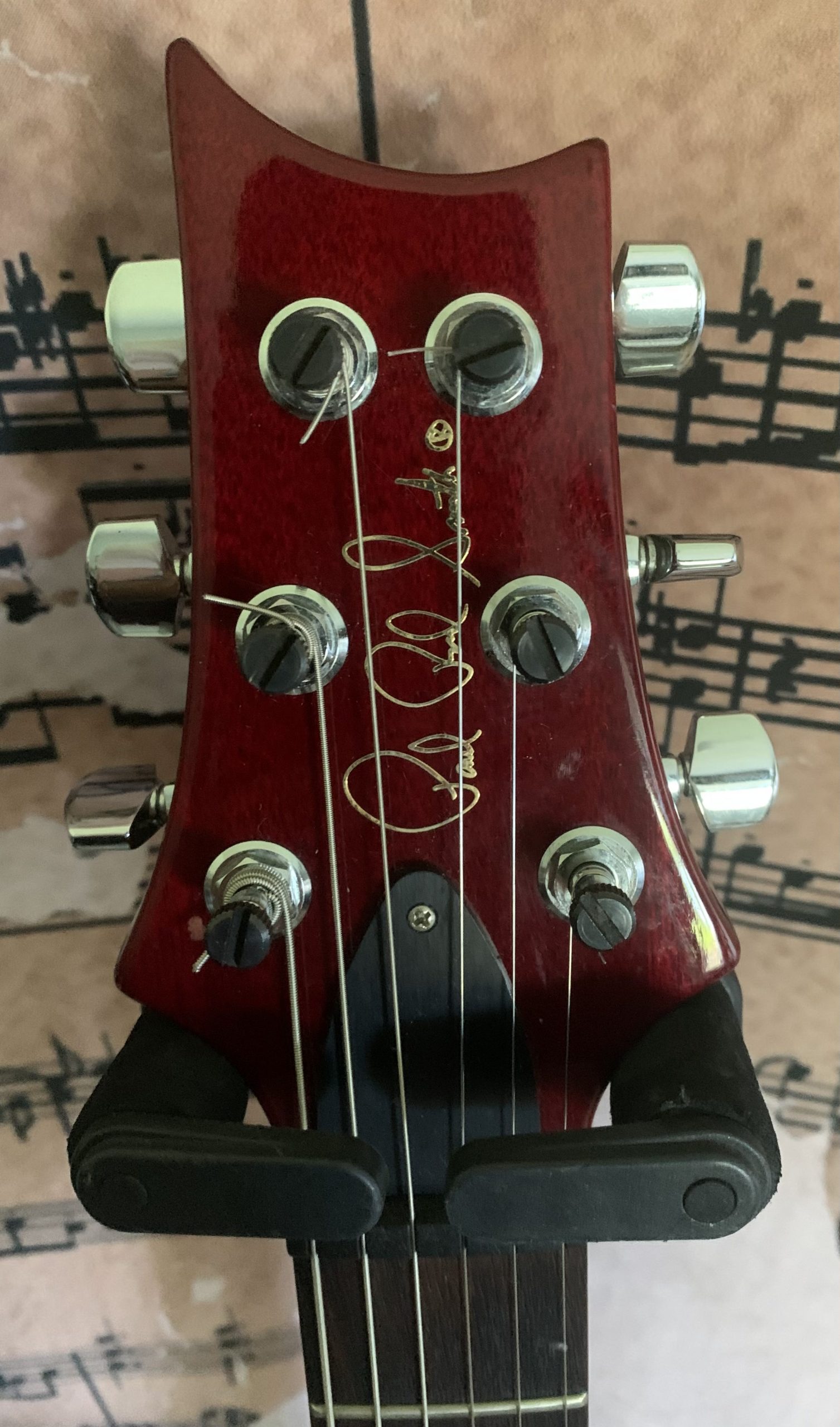
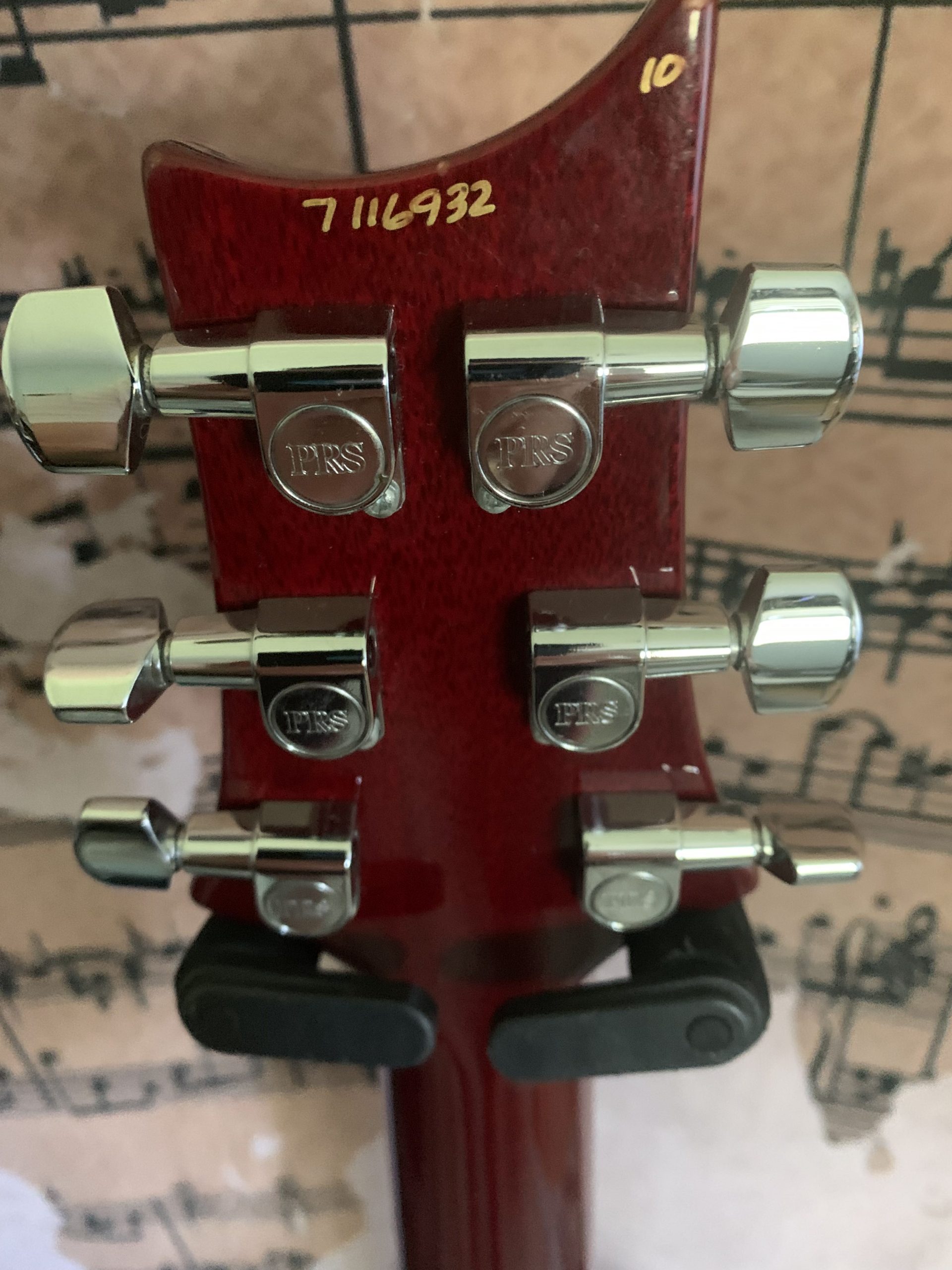
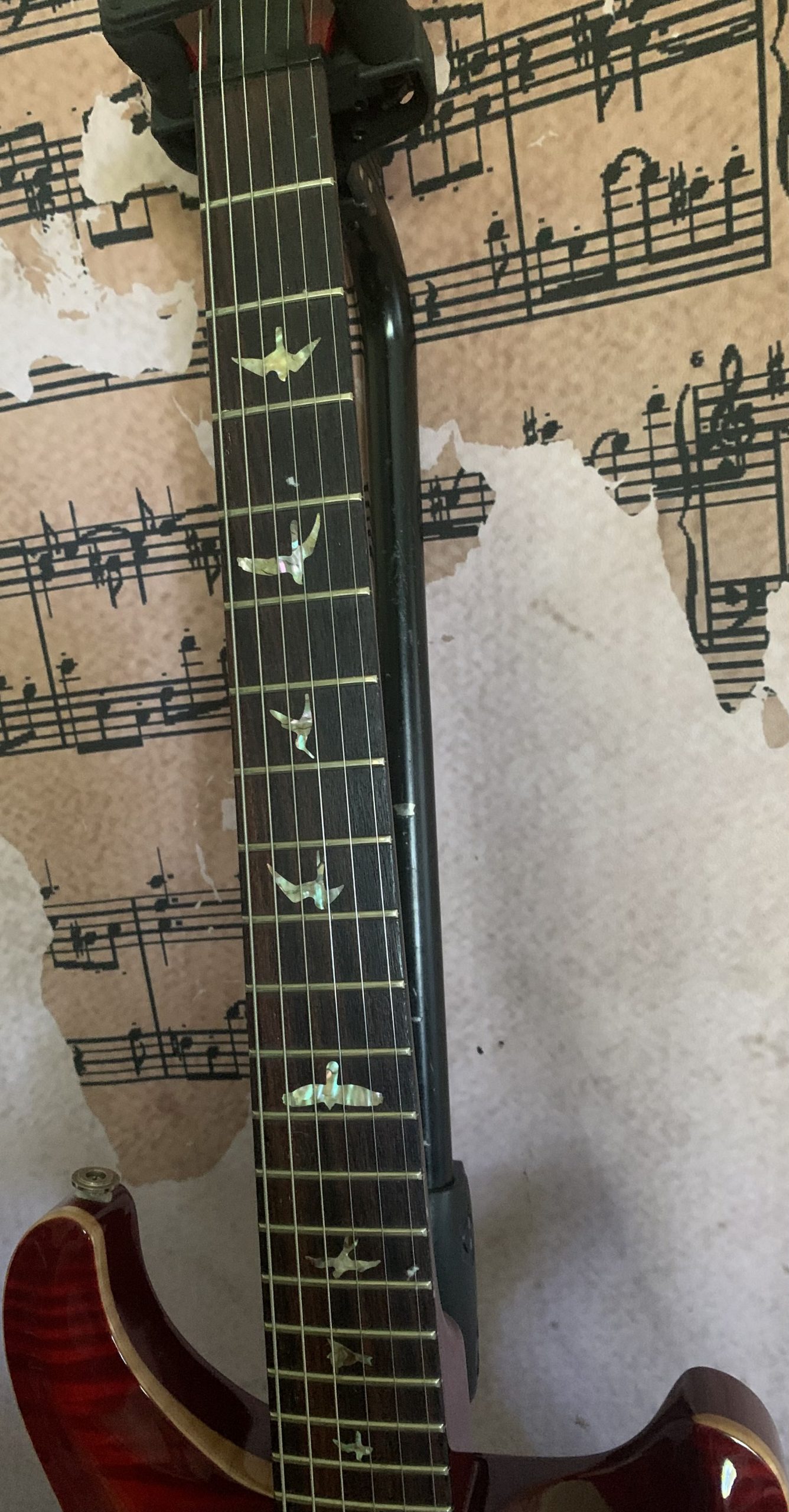
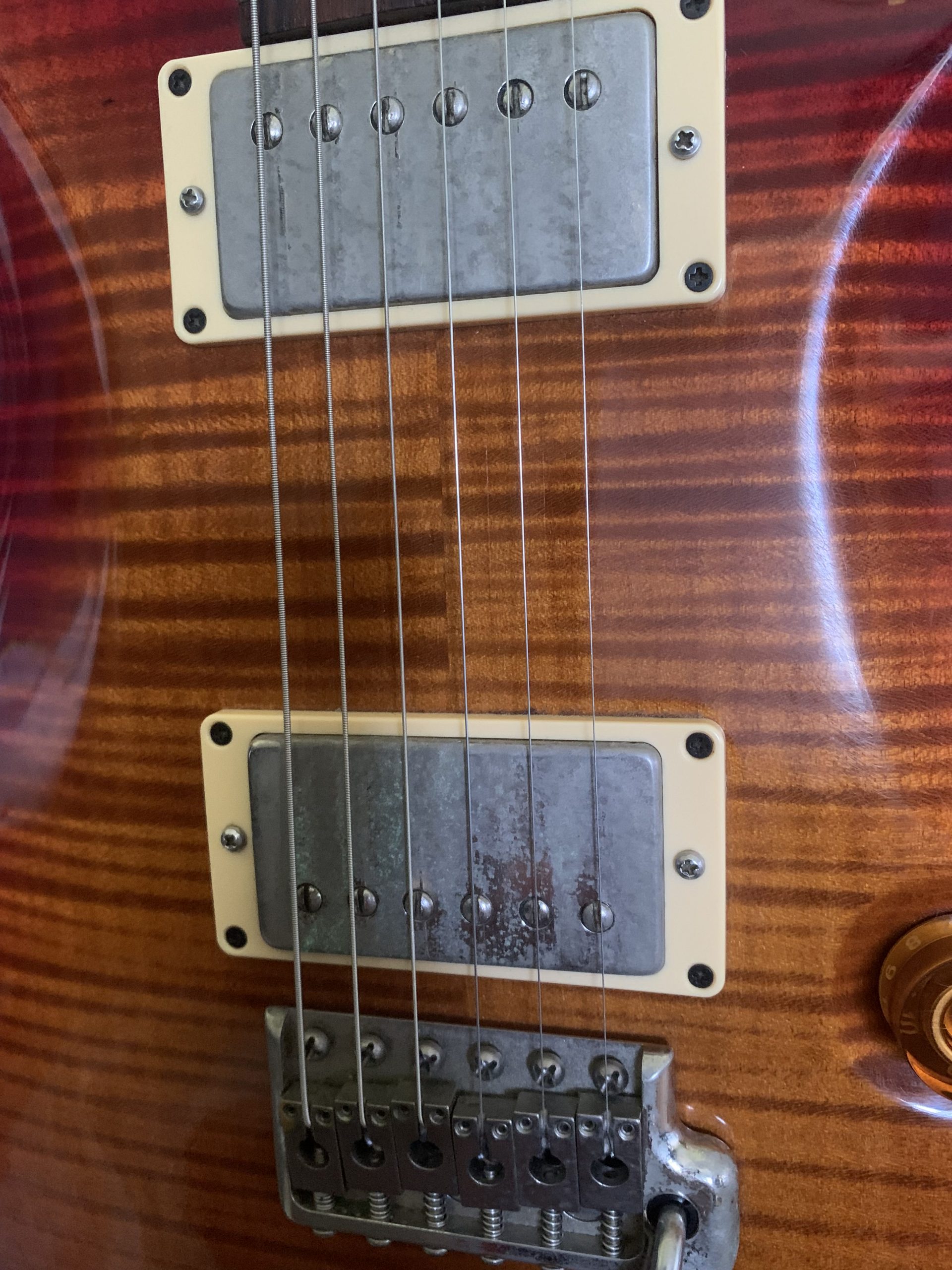
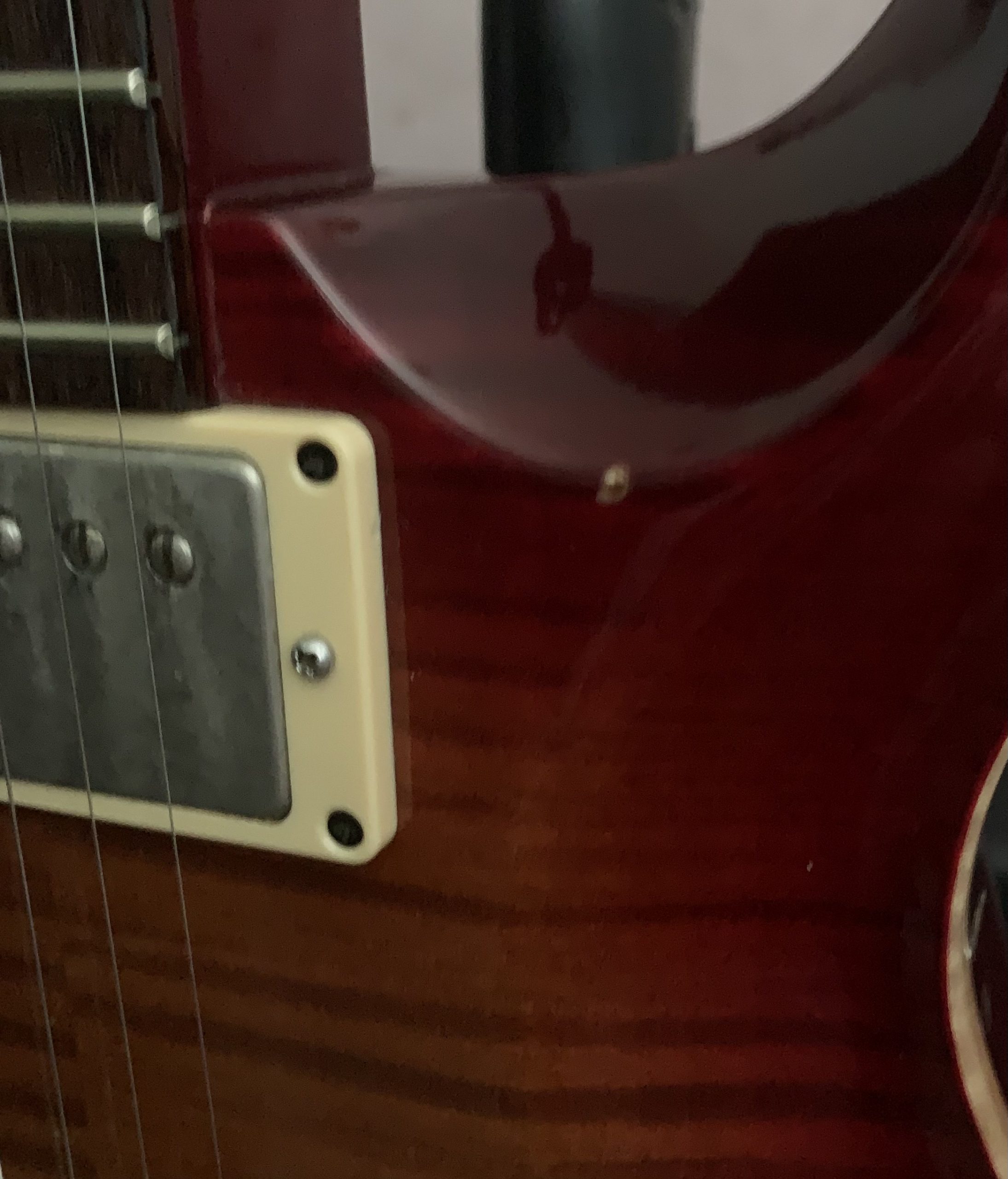
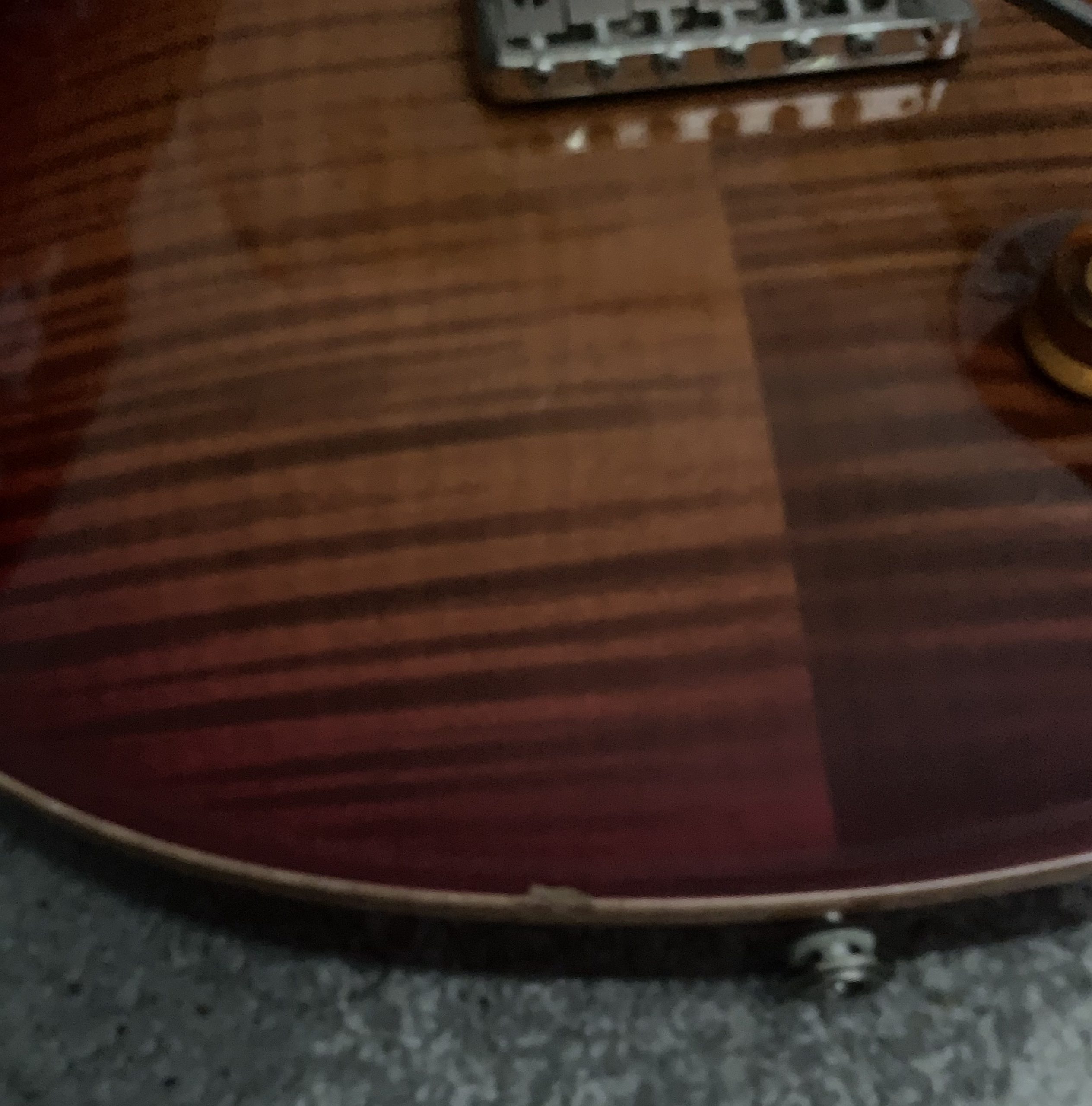

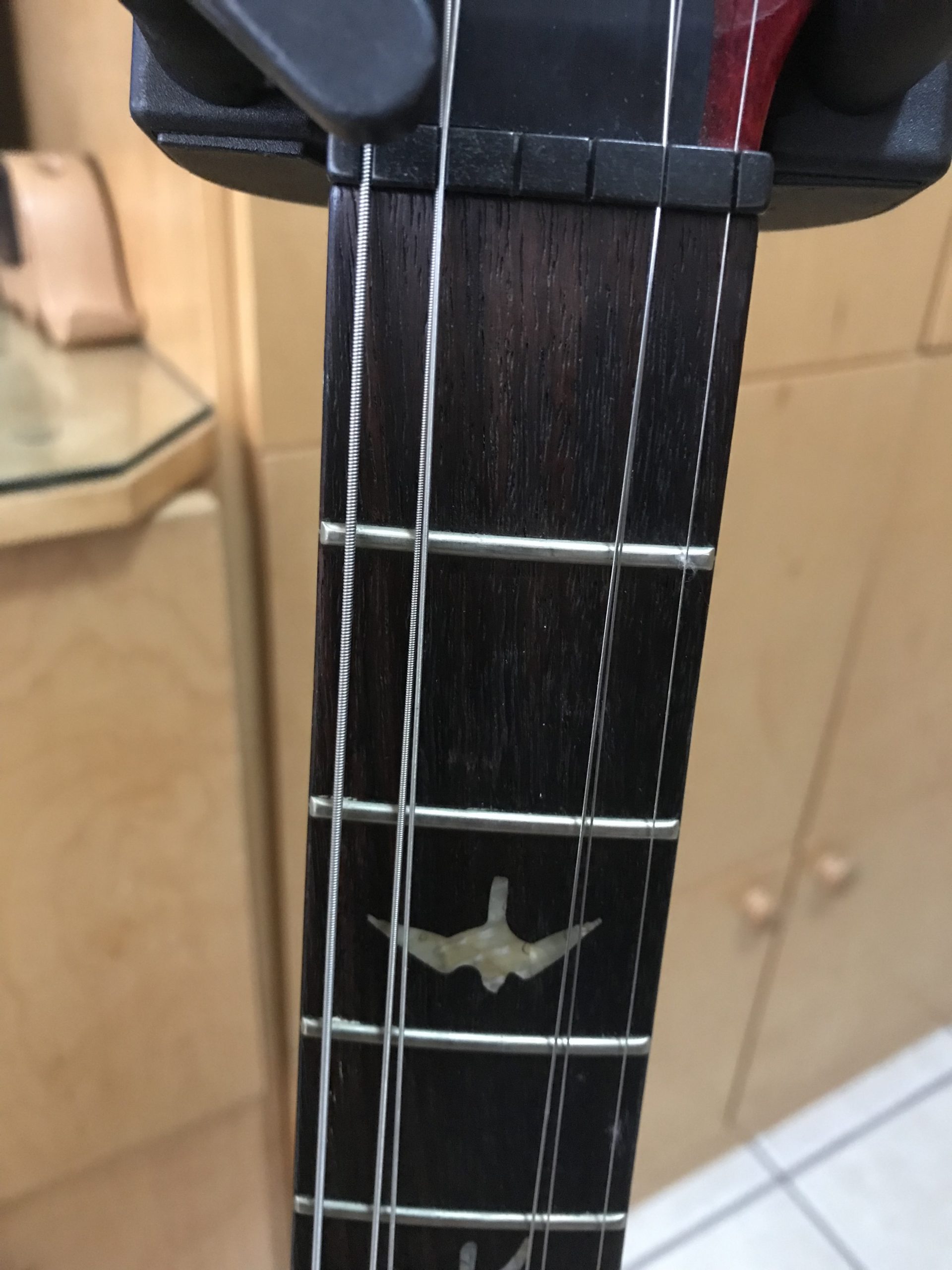
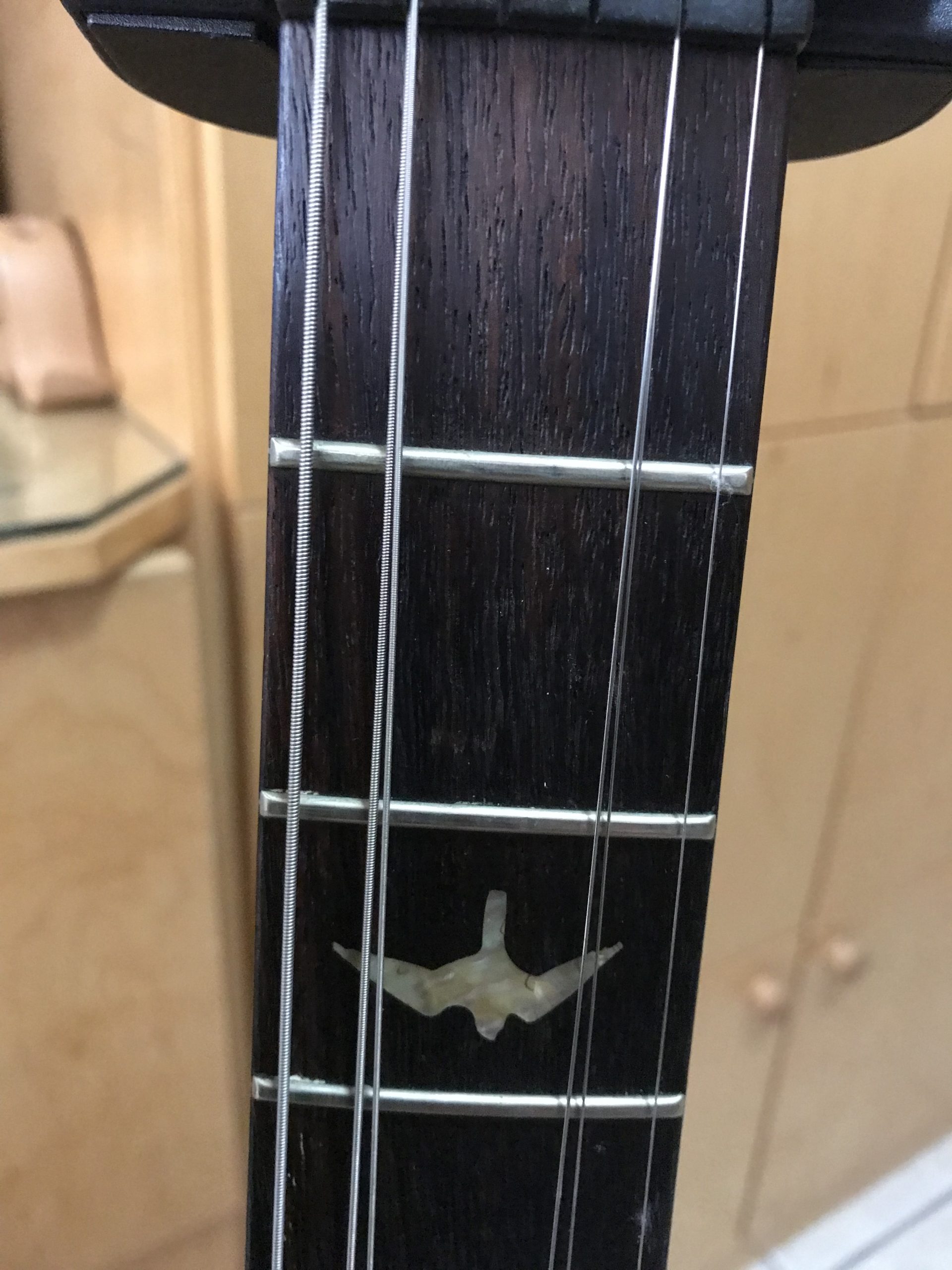
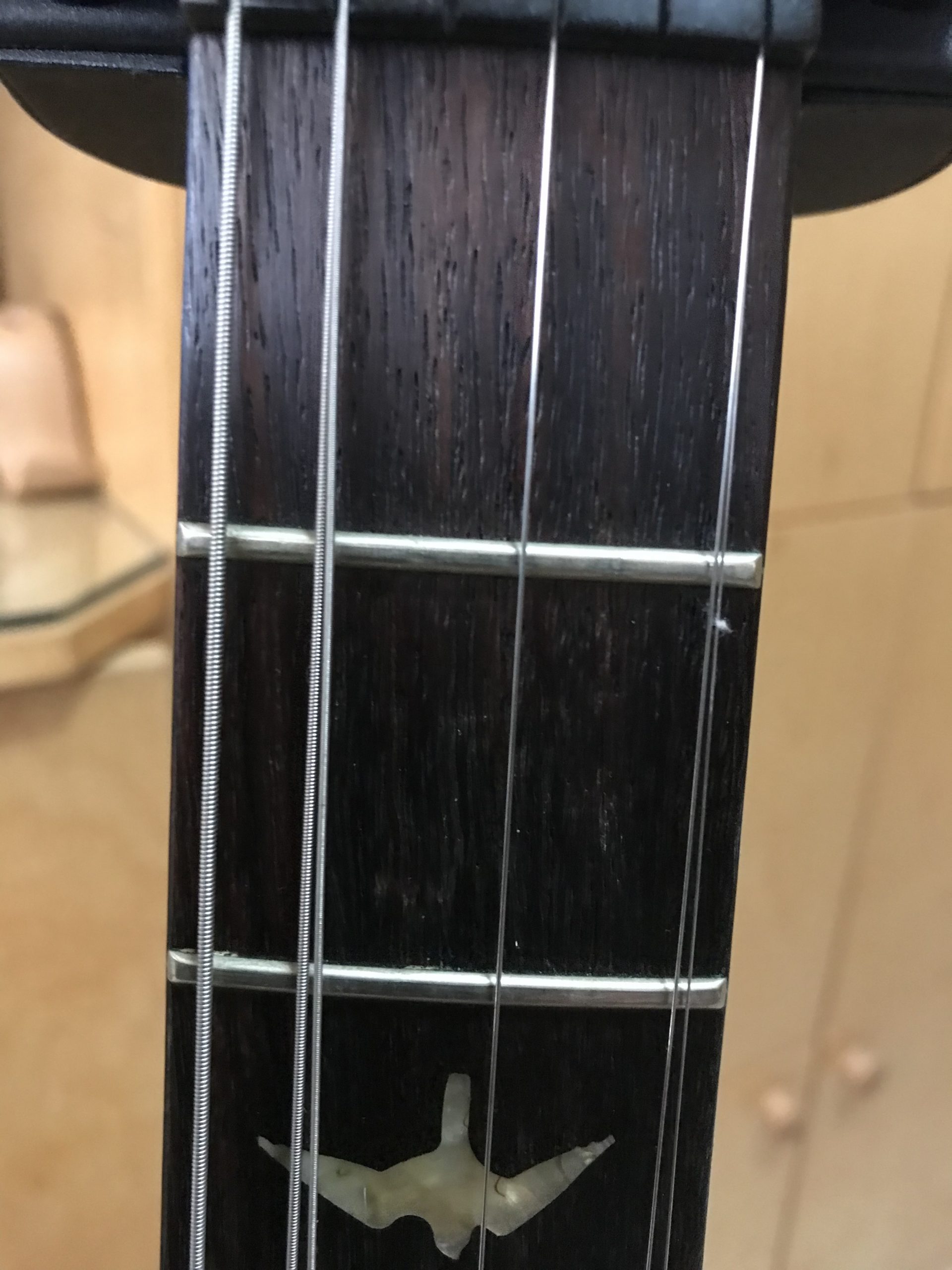
Someone asked me if the frets have dents. The answer is no. On fret 1 and 2 you can see where the strings cross the frets (see pictures below) but, they are not dent at all. You can rub your finger across the fret and feel nothing. All of the remaining frets look new.
I found the information below by searching my guitar model and make. I got this information from a guitar I found that I think is the same as mine. But I can’t guarantee it. I got the info here: https://www.themusiczoo.com/products/prs-custom-22-10-top-black-cherry-2007
What Is The Andalusian Cadence?
The Andalusian cadence, also known as the Andalusian progression or the Diatonic Phrygian Tetrachord, is a chord progression that is commonly found in flamenco and other styles of music influenced by Spanish and Andalusian traditions. It is named after the region of Andalusia in southern Spain.
The Andalusian cadence typically follows a descending pattern and is often played in a minor key. The progression is characterized by four chords played in a specific sequence:
i – ♭VII – ♭VI – V
In the key of A minor, for example, the Andalusian cadence would be:
Am – G – F – E
The chords are typically played as triads, but they can be embellished with additional notes or played as extended chords to add more complexity to the progression.
The Andalusian cadence has a distinctive and somewhat melancholic sound, and it has been widely used in various musical genres beyond flamenco, including rock, pop, and jazz. It can create a sense of tension and resolution, making it a popular progression for creating dramatic or emotional musical passages.
Which is correct, Caug7 or C7aug?
Both notations, C7aug and Caug7, are used to represent the same chord, which is a C augmented seventh chord. The “aug” in C7aug stands for “augmented,” indicating that the fifth of the chord (in this case, the G) is raised by a half step. The “7” in C7aug or Caug7 signifies that the chord also includes a minor seventh interval (in this case, the B♭).
The notation preference can vary depending on the context or personal preference of musicians. Both notations are commonly understood to represent the augmented seventh chord built on C.
Songs Using Rhythm Changes
A list of popular songs that use the I-vi-ii-V chord progression, also known as the “rhythm changes”:
- “I Got Rhythm” – George Gershwin
- “Lady Be Good” – George Gershwin
- “Anthropology” – Charlie Parker/Dizzy Gillespie
- “Oleo” – Sonny Rollins
- “Moose the Mooche” – Charlie Parker
- “Bebop” – Dizzy Gillespie
- “Donna Lee” – Charlie Parker
- “Dexterity” – Charlie Parker
- “Billie’s Bounce” – Charlie Parker
- “St. Thomas” – Sonny Rollins
- “Dewey Square” – Charlie Parker
- “Indiana” – Ballard MacDonald/James F. Hanley
- “Confirmation” – Charlie Parker
- “Au Privave” – Charlie Parker
- “Yardbird Suite” – Charlie Parker
- “Scrapple from the Apple” – Charlie Parker
- “Ornithology” – Charlie Parker
- “Just Friends” – John Klenner/Sam M. Lewis
- “A Night in Tunisia” – Dizzy Gillespie/Frank Paparelli
- “Groovin’ High” – Dizzy Gillespie
These songs are just a few examples, and there are many more compositions that utilize the I-vi-ii-V progression in various forms.
The 7th Chords
A 7 chord, also known as a dominant 7 chord, is a type of chord that consists of a root note, a major third interval, a perfect fifth interval, and a minor seventh interval. The 7 chord is widely used in various genres of music, including jazz, blues, rock, and pop. There are different types of 7 chords based on the intervals and alterations they include. Here are some common types:
- Dominant 7 (C7): This is the basic 7 chord and is formed by combining the root note (C), the major third (E), the perfect fifth (G), and the minor seventh (Bb). It is denoted by the letter name of the root followed by the number 7 (e.g., C7).
- Major 7 (Cmaj7): This chord has a major seventh instead of a minor seventh. It is formed by combining the root note (C), the major third (E), the perfect fifth (G), and the major seventh (B). It has a brighter and more “jazzy” sound compared to the dominant 7 chord.
- Minor 7 (Cm7): This chord has a minor third and a minor seventh. It is formed by combining the root note (C), the minor third (Eb), the perfect fifth (G), and the minor seventh (Bb). It is commonly used in jazz, blues, and funk.
- Half-diminished 7 (Cø7): Also known as minor 7 flat 5 or C minor 7th flat 5, this chord has a diminished fifth. It is formed by combining the root note (C), the minor third (Eb), the diminished fifth (Gb), and the minor seventh (Bb). It is often used in jazz and adds tension to chord progressions.
- Diminished 7 (Cdim7): This chord consists of a diminished triad with an added diminished seventh. It is formed by combining the root note (C), the minor third (Eb), the diminished fifth (Gb), and the diminished seventh (Bbb/A). It has a dissonant and unstable sound and is commonly used as a passing chord or for creating tension.
These are some of the common types of 7 chords. However, it’s worth noting that there are also extended 7 chords, altered 7 chords, and various other chord modifications that musicians use to create different harmonic colors and expressiveness in their compositions.
What Is Chord Embellishment?
Chord embellishment, also known as chord decoration or chord extension, refers to the process of adding additional tones or modifying the basic chords in a musical composition to create more harmonic complexity or color. It involves altering the standard triadic or seventh chord by incorporating extra notes, such as tensions, suspensions, or alterations.
By embellishing chords, composers and musicians can enhance the emotional impact, add tension or release, and create a more nuanced and sophisticated harmonic language. Chord embellishments can be applied in various musical genres, including classical, jazz, pop, and others.
Here are a few common examples of chord embellishments:
- Suspensions: In a suspension, a non-chord tone is temporarily added, usually a fourth above a chord tone, which then resolves to a consonant note. For instance, in a C major chord (C-E-G), a suspension could involve adding an F note (resulting in C-F-G), which then resolves to an E (C-E-G).
- Extensions: Extensions involve adding additional notes beyond the basic triadic or seventh chords. Common extensions include adding the ninth (e.g., C9 = C-E-G-Bb-D), eleventh (e.g., C11 = C-E-G-Bb-D-F), or thirteenth (e.g., C13 = C-E-G-Bb-D-F-A) to a chord.
- Altered chords: Altered chords modify the basic chord tones to create tension or dissonance. For example, a dominant seventh chord (e.g., C7 = C-E-G-Bb) can be altered by sharpening or flattening the fifth (C7#5 or C7b5) or by adding a sharp or flat ninth (C7#9 or C7b9).
- Added tones: These involve adding non-chord tones to a basic chord to create richer harmonies. For instance, adding a major seventh to a major triad (e.g., Cmaj7 = C-E-G-B) or adding a sixth to a dominant seventh chord (e.g., C7add6 = C-E-G-Bb-A).
These are just a few examples, and chord embellishments can take many other forms depending on the musical context and the desired effect. The choice of embellishments often depends on the composer’s or performer’s artistic intention, the style of the music, and the overall harmonic progression.
The Augmented Chord
The augmented chord is a three-note chord that consists of a root note, a major third interval, and an augmented fifth interval. It is often represented as “aug” or with the “+” symbol. For example, a C augmented chord is written as Caug or C+.
The function of the augmented chord can vary depending on the musical context. However, its most common function is as an augmented dominant chord, also known as a “tritone substitution.” In this role, the augmented chord acts as a substitute for the dominant chord, creating tension and leading to the resolution of a target chord. For instance, an augmented chord built on the raised fifth of a key can resolve to the tonic chord, providing a unique and colorful resolution.
The uniqueness of the augmented chord lies in its augmented fifth interval. Unlike major and minor chords, which have a perfect fifth interval, the augmented chord has a larger, augmented fifth. This augmented fifth creates a distinct and heightened sense of tension and dissonance. The dissonance of the augmented chord can evoke a sense of urgency or unease, adding a vibrant and captivating quality to compositions.
Additionally, the augmented chord is symmetrically structured. Each interval in the chord is a major third apart, resulting in a repeating pattern every four frets on the guitar or every four keys on the piano. This symmetry allows for transposition of the chord to any of the other 11 possible root notes while maintaining its augmented quality. It offers flexibility in harmonic possibilities and can be used to add unique and unexpected harmonic progressions or color tones to musical compositions.
In summary, the augmented chord functions primarily as an augmented dominant chord, creating tension and leading to resolution. Its uniqueness lies in its augmented fifth interval, which adds dissonance and a heightened sense of tension. The chord’s symmetrical structure allows for transposition and opens up possibilities for innovative harmonic choices. The augmented chord is a valuable tool for composers and musicians seeking to add complexity and intrigue to their music.
The Diminished 7 Chord
The diminished 7 chord is a four-note chord that consists of a root note, a minor third interval, a diminished fifth interval, and a diminished seventh interval. It is often represented as “dim7” or with the ° symbol. For example, a C diminished 7 chord is written as Cdim7 or C°7.
The function of the diminished 7 chord is primarily as a dominant function chord. In traditional Western tonal harmony, the diminished 7 chord has a strong tendency to resolve to another chord, usually a major chord whose root is a half step above any of the chord tones of the diminished 7 chord. This resolution is known as the “common-tone diminished 7th chord resolution.”
The unique quality of the diminished 7 chord lies in its symmetrical structure. Each interval in the chord is a minor third apart, resulting in a symmetrical pattern that repeats every three frets on the guitar or every three keys on the piano. This means that there are only three distinct diminished 7 chords, and each one can be transposed to any of the other 11 possible root notes.
The symmetrical nature of the diminished 7 chord allows for various applications and harmonic possibilities. For example, due to its symmetry, any of the four notes in the diminished 7 chord can function as a root, resulting in different inversions and chord qualities. This versatility makes it a useful tool for creating tension and adding color to chord progressions and improvisations.
Furthermore, the diminished 7 chord has a unique harmonic quality that gives it a dissonant and unstable character. The chord’s diminished fifth interval (also known as a tritone) creates a strong dissonance, and the diminished seventh interval adds further tension. This dissonance makes the chord highly expressive and provides opportunities for creating tension and resolution in musical compositions.
In summary, the diminished 7 chord functions as a dominant chord and is known for its symmetrical structure, versatile inversions, and dissonant character. Its unique qualities make it a valuable tool for composers, arrangers, and improvising musicians in a wide range of musical styles.
What is the Jewish scale?
The “Jewish scale” refers to a musical scale associated with Jewish music, particularly traditional Jewish music and Hebrew melodies. It is often used in klezmer music, synagogue music, and other Jewish cultural contexts.
The Jewish scale, also known as the Ahava Rabbah scale or the Freygish scale, is a heptatonic (seven-note) scale. It can be understood as a mode or variant of the harmonic minor scale. The scale is typically described as having the following intervals:
Root – Half Step – Whole Step – Whole Step – Half Step – Whole Step – Whole Step
Using the key of C as an example, the Jewish scale would consist of the notes:
C – Db – E – F – G – Ab – B – C
This scale has a distinctive Eastern or Middle Eastern sound and evokes a particular flavor and character associated with Jewish music. It has been used to create melodies that are commonly heard in traditional Jewish songs, liturgical music, and klezmer music.
It’s important to note that Jewish music encompasses a wide variety of styles and traditions, and the Jewish scale is just one of the many scales and melodic frameworks found in Jewish musical heritage. Different Jewish communities and regions may have their own unique scales and melodic characteristics that contribute to the rich diversity of Jewish music.