Guitar Lessons Level 3
Chord construction
Chord construction: understanding how chords are constructed.
The seven chords in the key of C also know as the Nashville System using basic open chords.
Triads
Root position triads are a fundamental concept in music theory, referring to a specific type of chord structure. A triad is a chord made up of three notes that are typically played or sung together. These three notes consist of a root note, a third, and a fifth. The term “root position” indicates that the root note of the triad is the lowest note of the chord when it is played or written.
 Root position triads in the key of C. 4 sets.
First inversions of triads are a fundamental concept in music theory that involve altering the position of the notes in a triad.
Second inversion triads are another essential concept in music theory, further expanding on the idea of rearranging the notes within a triad to achieve different sounds and harmonic textures.
Let’s review the triads we have been learning.
Below we have chord progressions using triads we have studied in previous lessons. It is time to get creative! Use what you have learned about enhancement with the chords. Use chords sus 2, add9, sus 4, 6, 7, maj7, aug and so on.
Chord progressions using set 1
Chord progressions using set 2
Chord progressions using set 3
Chord progressions using set 4
Vertical and horizontal approach to the triads
C triads
Dm triads
Em triads
F triads
G triads
Am triads
Bdim triads
More enrichment
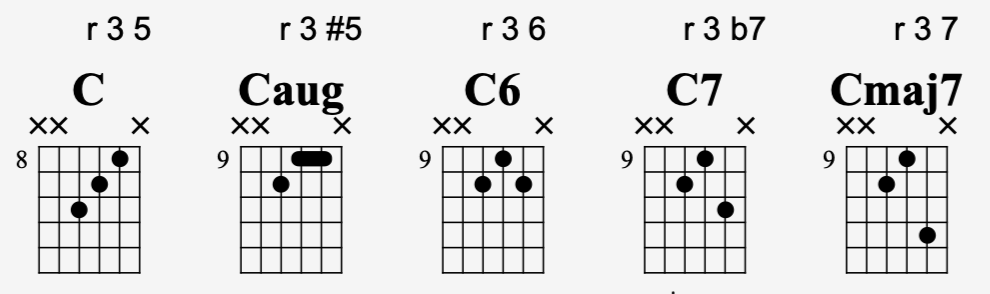
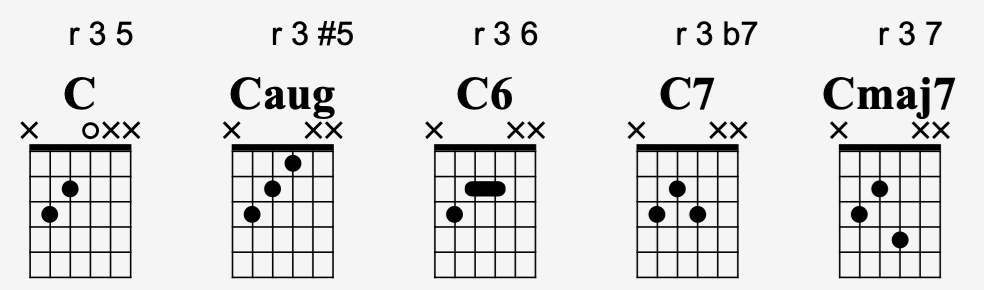
Augmented triads (raising the 5th interval a semi-tone to get the #5)
Major 6 triads (raising the 5th interval a whole tone to get the 6)
Dominant 7 triads (raising the 5th interval 1 1/2 tones to get the b7)
Major 7 triads (raising the 5th interval 2 whole tones to get the 7)
Major 7 triads (lowering the 1st interval a semi-tone to get a 7)
Dominant 7 triads (lowering the 1st interval a whole tone to get a b7)
Major 6 triads (lowering the 1st interval 1 1/2 tones to get the 6)
Combining voicing of the C Major 7 triads
Combining voicings of the Dominant 7 triads
Combining voicings of the Major 6 triads
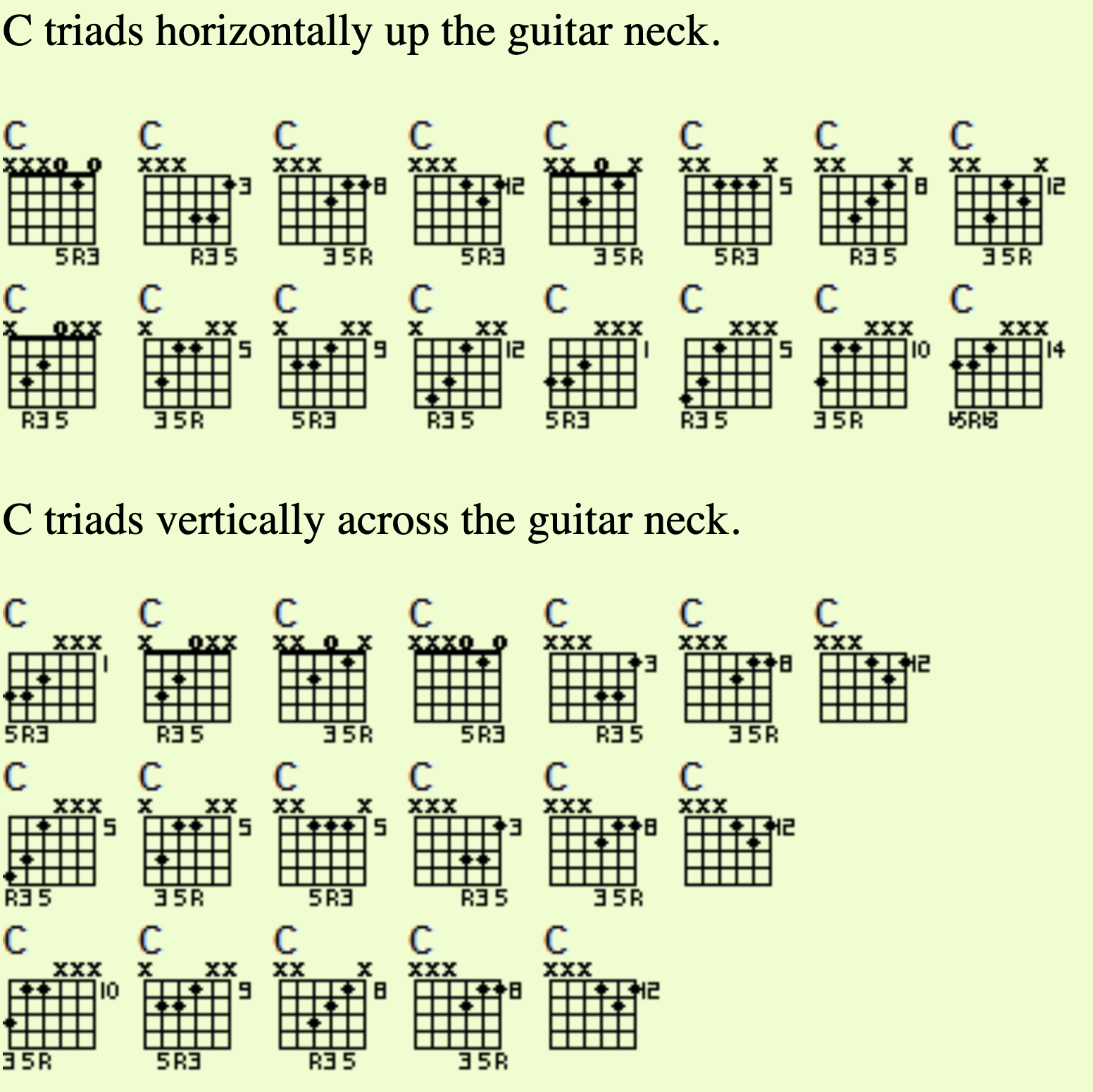
Voicings
In the following exercise, the voicings of each triad are played starting with the voicing closest to the nut of the guitar and ending with the one furthest from the nut.
Set 1

Set 2

Set 3

Set 4

Violin For Sale
$600
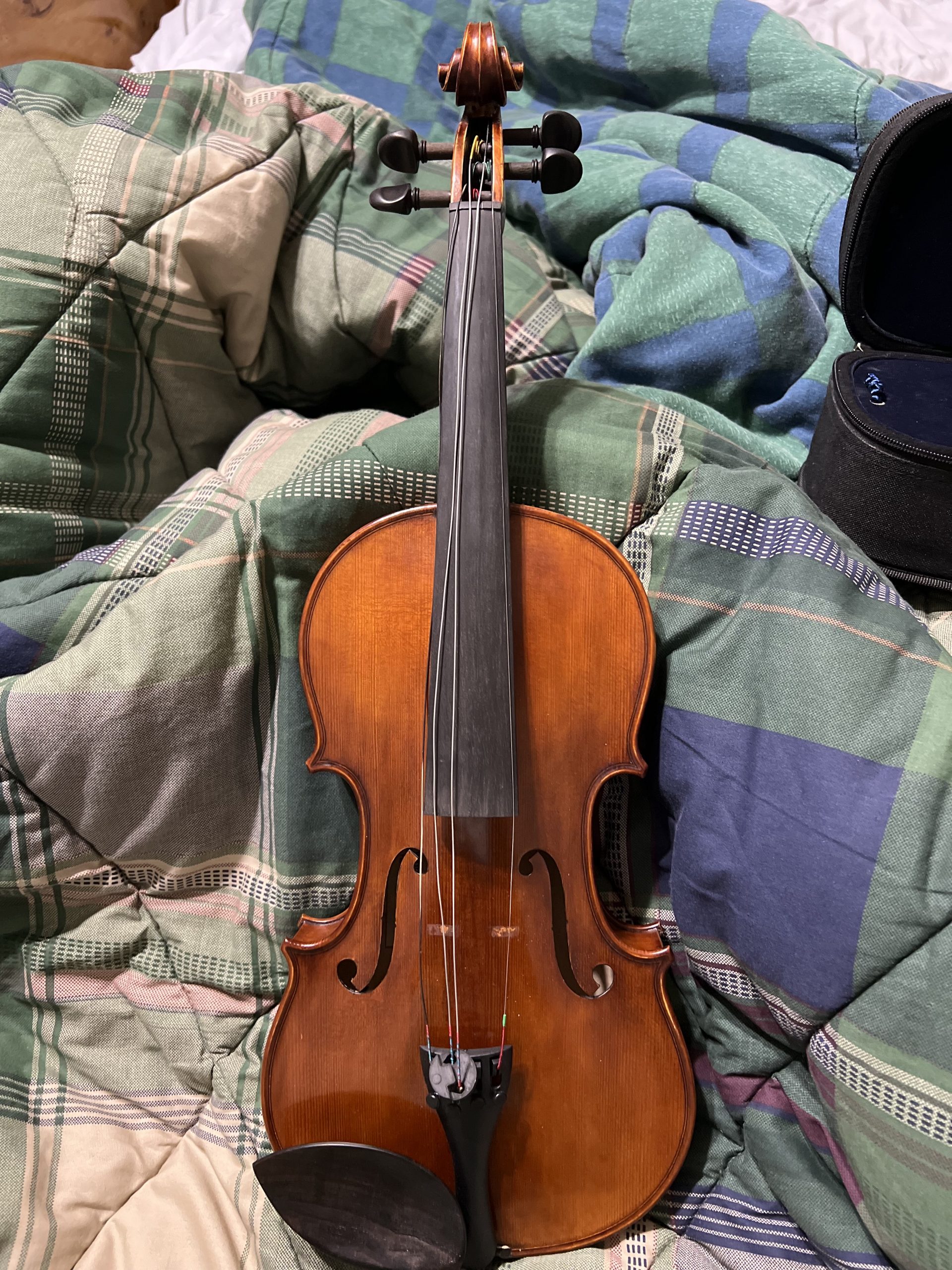
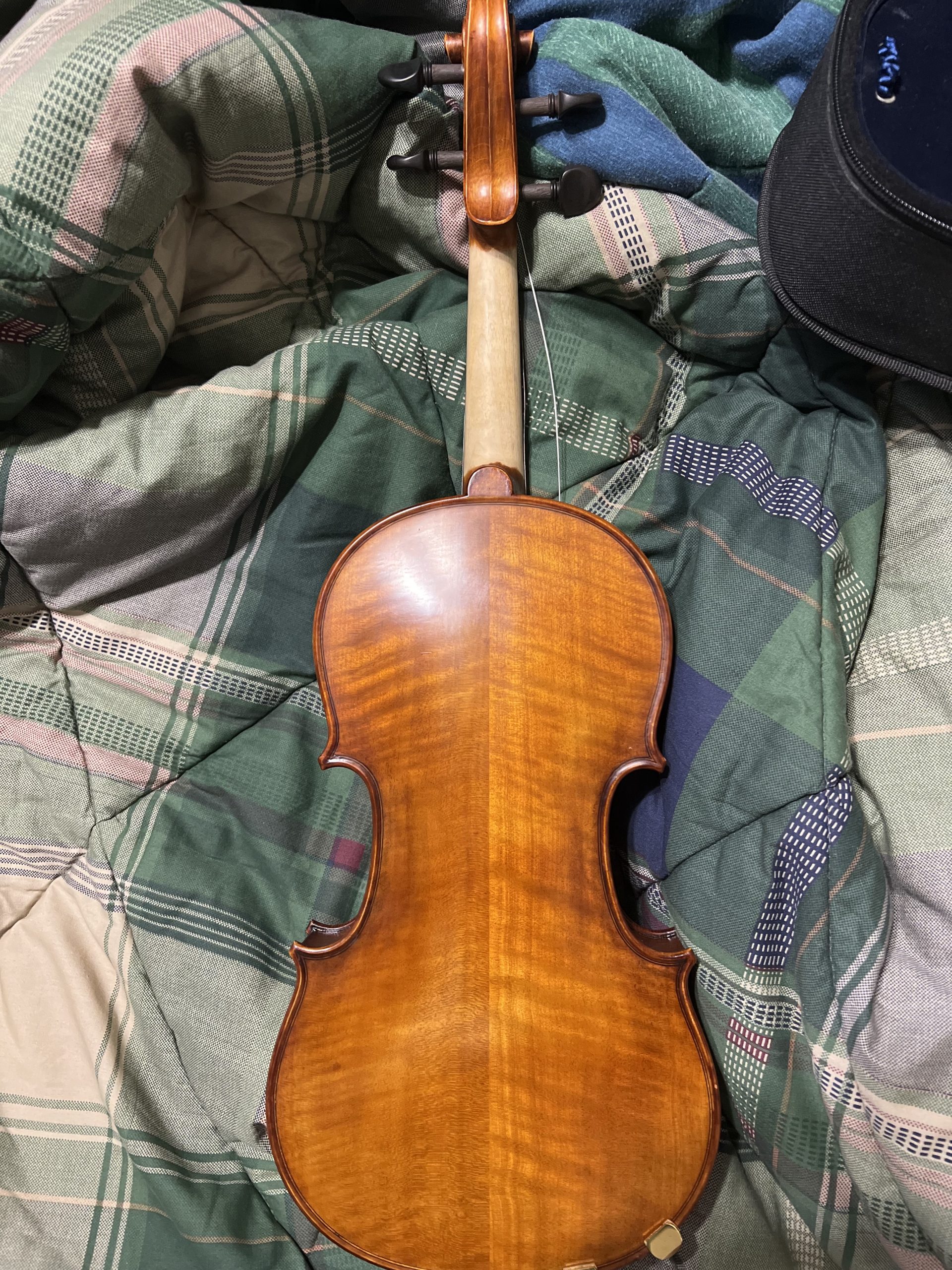
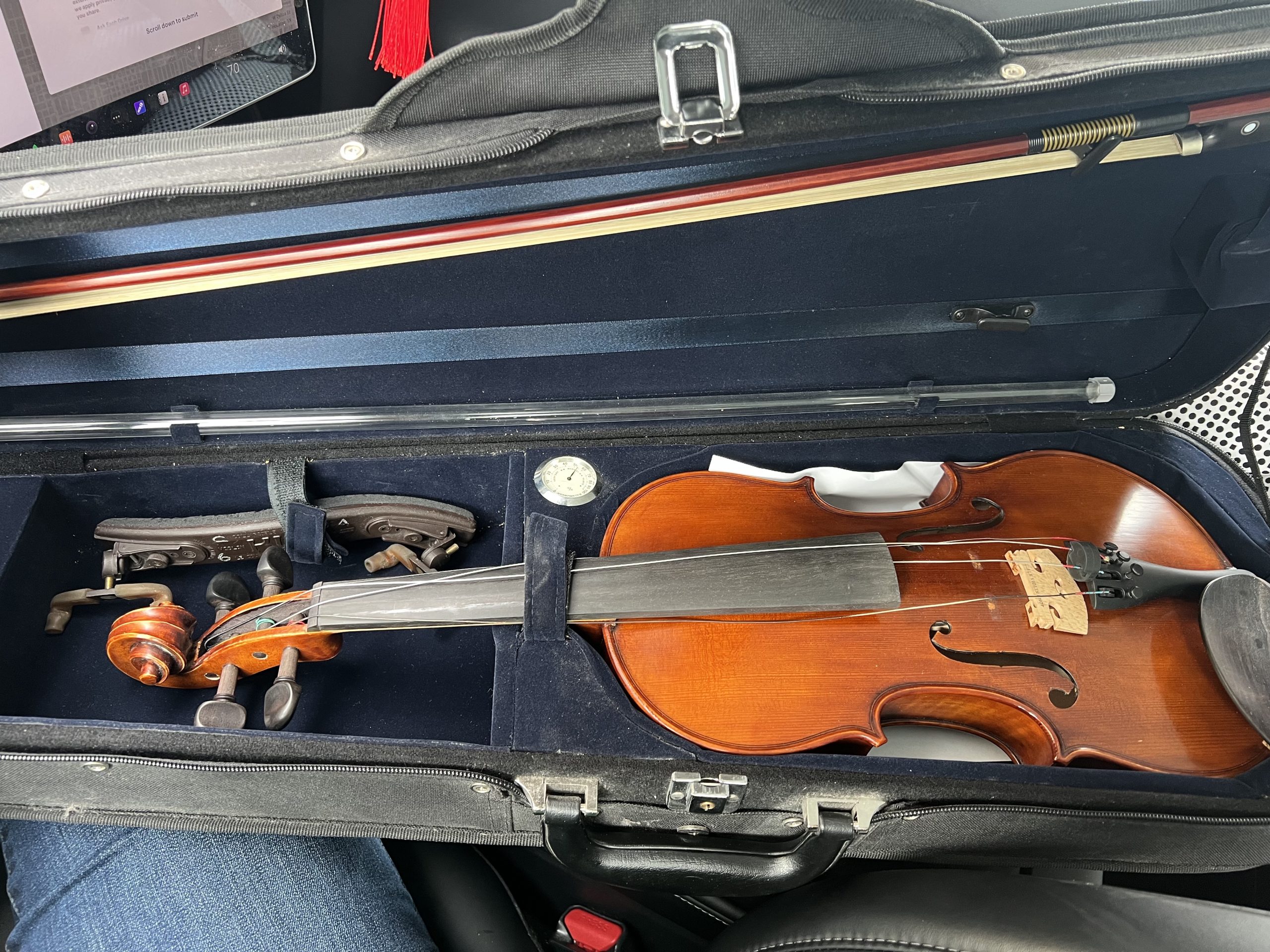
Full size
Year: 2008
Make: Lisle
Model: 126
Spruce top/ maple back and sides
Serial number: 1080730
Accessories included: bow, retractable chin rest, resin and case.
Condition: hardly used but in great condition.
The Lisle Violin model 126 is distributed by the Lisle Violin shop in Houston, Texas. These student violins are designed to be student oriented, and are offered at a great price point. These violins are made in China, with a spruce top, and maple back and sides. The medium gloss finish helps produce a rich, warm timbre.
info: jyothi.achi2@gmail.com
Guitar Lessons Level 2
Guitar Chords level 2
Enrichment
In level two we take the seven keys we learned in level one and enrich the chords by adding the intervals of the diatonic major scale to create the add 2, add 9, sus 4, 6, and major 7. This is known as enrichment, embellishment, or adding color.
1. G
2. C
3. D
4. A
5. E
6. Em
7. Am
Blues scales
Chords and riffs
Chords and riffs in the key of G 1st position
Guitar Lessons Level 1
The Fret Board
A visual illustration of the notes on the fretboard
The fret board: 10 short videos explaining how to master the fretboard.
Chords
Let’s Learn An Easy Song
Scales
Riffs
BLUES RIFFS
The accompanying videos
Chord Enrichment part 3
2nd Inversion Major Triad Derivatives
The 1st set of strings 1, 2, and 3:
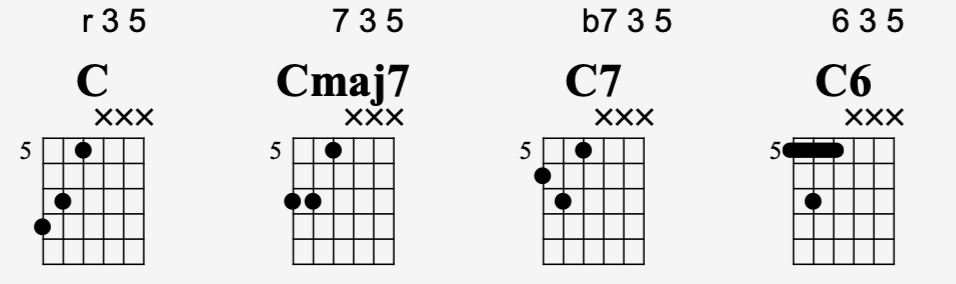
We can enrich chords by simply lowering the root, which is on the 2nd string, by a half step (1 fret) as shown below:

We can also enrich chords by raising the 5th interval by half steps on the 3rd string:

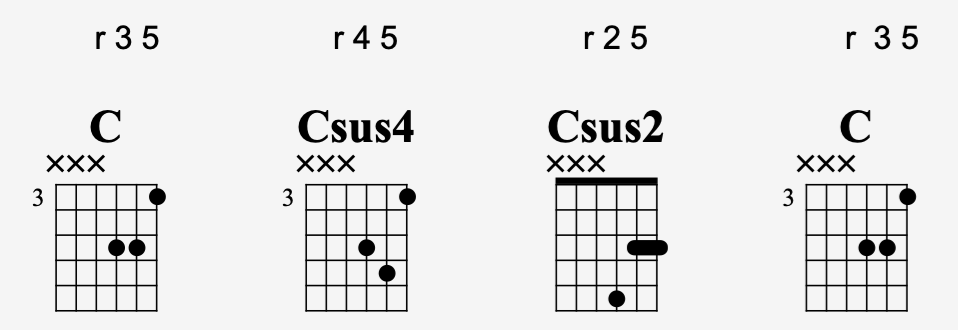
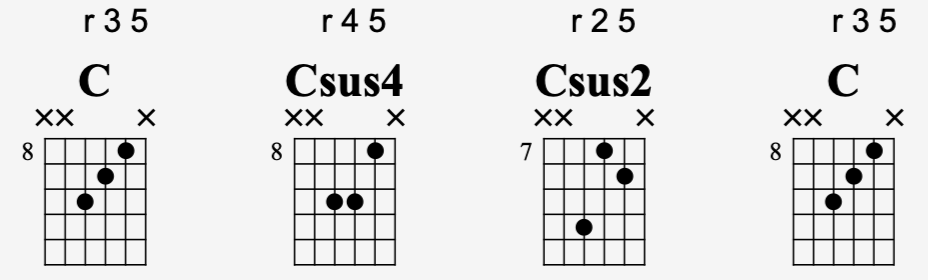
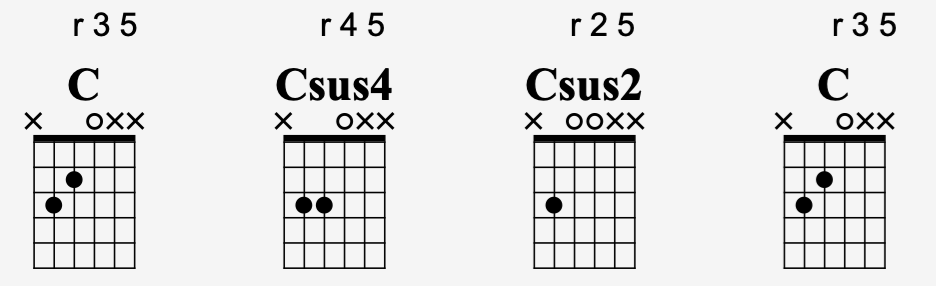
By raising the 3rd interval on the 1st string up 1/2 step to the 4th interval we get the suspended 4 chord (Csus4). By lowering the 1st string a whole step to the 2nd interval we get the suspended 2 chord (Csus2). These chords are called suspended because our ears want the 4 or 2 intervals to resolve to the 3rd interval. We are accustomed to hearing the major triad which has the 1, 3, and 5 intervals. Ending a song or a phrase on a sus chord sounds unresolved. The sus wants to resolve or end on a major 3rd interval:

The 2nd set of strings 2, 3, and 4.


The 3rd set of strings 3, 4, and 5.


The 4th set of strings 4, 5, and 6.


If you are not familiar with any of these terms or concepts visit guitar goodies.
Chord Enrichment part 2
1st Inversion Major Triad Derivatives
The 1st set of strings 1, 2, and 3:
We can enrich chords by simply lowering the root, which is on the 1st string, by a half step (1 fret) as shown below:
 We can also enrich chords by raising the 5th interval by half steps on the 2nd string:
 By raising the 3rd interval on the 3rd string up 1/2 step to the 4th interval we get the suspended 4 chord (Csus4). By lowering the 3rd string a whole step to the 2nd interval we get the suspended 2 chord (Csus2). These chords are called suspended because our ears want the 4 or 2 intervals to resolve to the 3rd interval. We are accustomed to hearing the major triad which has the 1, 3, and 5 intervals. Ending a song or a phrase on a sus chord sounds unresolved. The sus wants to resolve or end on a major 3rd interval:

The 2nd set of strings 2, 3, and 4.


The 3rd set of strings 3, 4, and 5.


The 4th set of strings 4, 5, and 6.


If you are not familiar with any of these terms or concepts visit guitar goodies.
Chord Enrichment part 1
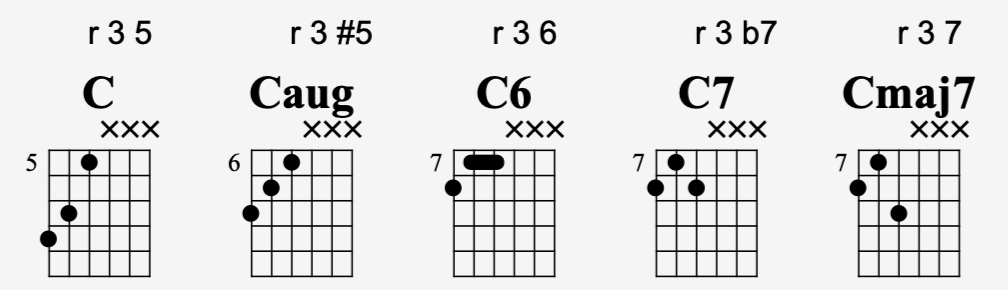
Chord enrichment refers to the process of adding notes to a basic chord to create more complex and sonically interesting chords. The basic chords are typically triads, which consist of three notes: the root, the third, and the fifth. Enriching a chord involves adding additional notes beyond these three, often by incorporating notes that are part of the chord’s scale but not part of the basic triad. However, the notes do not necessarily have be in the diatonic scale such as the ♭7 in C7 or the #5 in Caug.
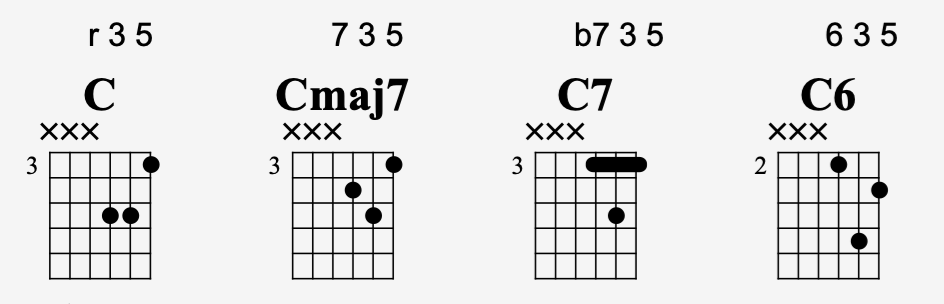
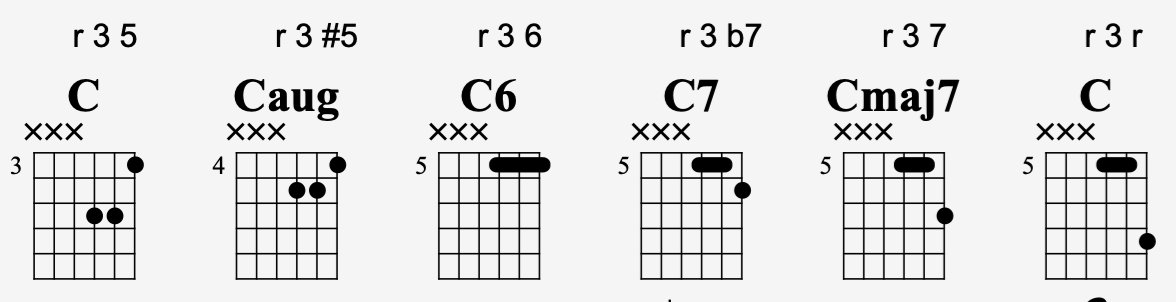
The goal of these exercises is to understand how to construct chords using intervals. Simply memorizing images of chords is not our goal. Be sure to observe what intervals are used to construct each chord. The intervals are on top of each chord diagram. For example, the first chord you see is the C major triad which uses the root (1), 3, and 5 intervals. It is labeled C meaning C major. The next chord has the intervals 7, r, and 3. This is labeled Cmaj7 meaning a C major 7 chord and so on. Understanding intervals is the key.
Root Position Major Triad Derivatives
The 1st set of strings 1, 2, and 3:
We can enrich chords by simply lowering the root, which is on the 3rd string, by a half step (1 fret) as shown below:
We can also enrich chords by raising the 5th interval by half steps on the 1st string:
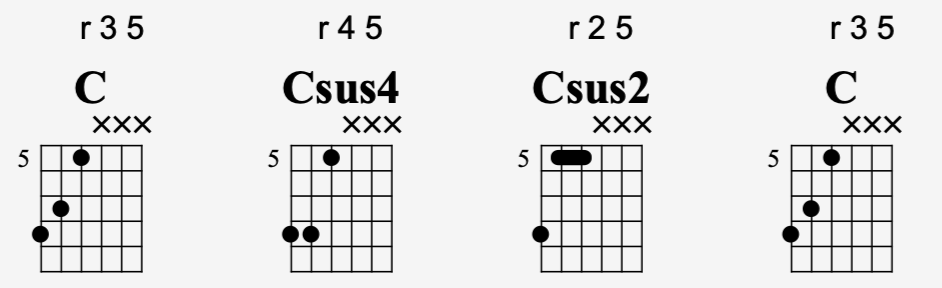
By raising the 3rd interval on the 2nd string up 1/2 step to the 4th interval we get the suspended 4 chord (Csus4). By lowering the 3rd interval a whole step to the 2nd interval (2nd string) we get the suspended 2 chord (Csus2). These chords are called suspended because our ears want the 4 or 2 intervals to resolve to the 3rd interval. We are accustomed to hearing the major triad which has the 1, 3, and 5 intervals. Ending a song or a phrase on a sus chord sounds unresolved. The sus wants to resolve or end on a major 3rd interval: